Overview
We built an end-to-end churn prediction workflow that helps teams identify at-risk customers earlier and act with better precision. The project focused on handling class imbalance, training a strong predictive model, and communicating insights in a way that supports retention strategy.
Problem
Customer churn is often difficult to predict because the target class is rare and the data is highly imbalanced. We needed a modeling approach that could learn from minority cases without losing predictive power.
Approach
We used a structured machine learning workflow that included:
- data cleaning and feature engineering
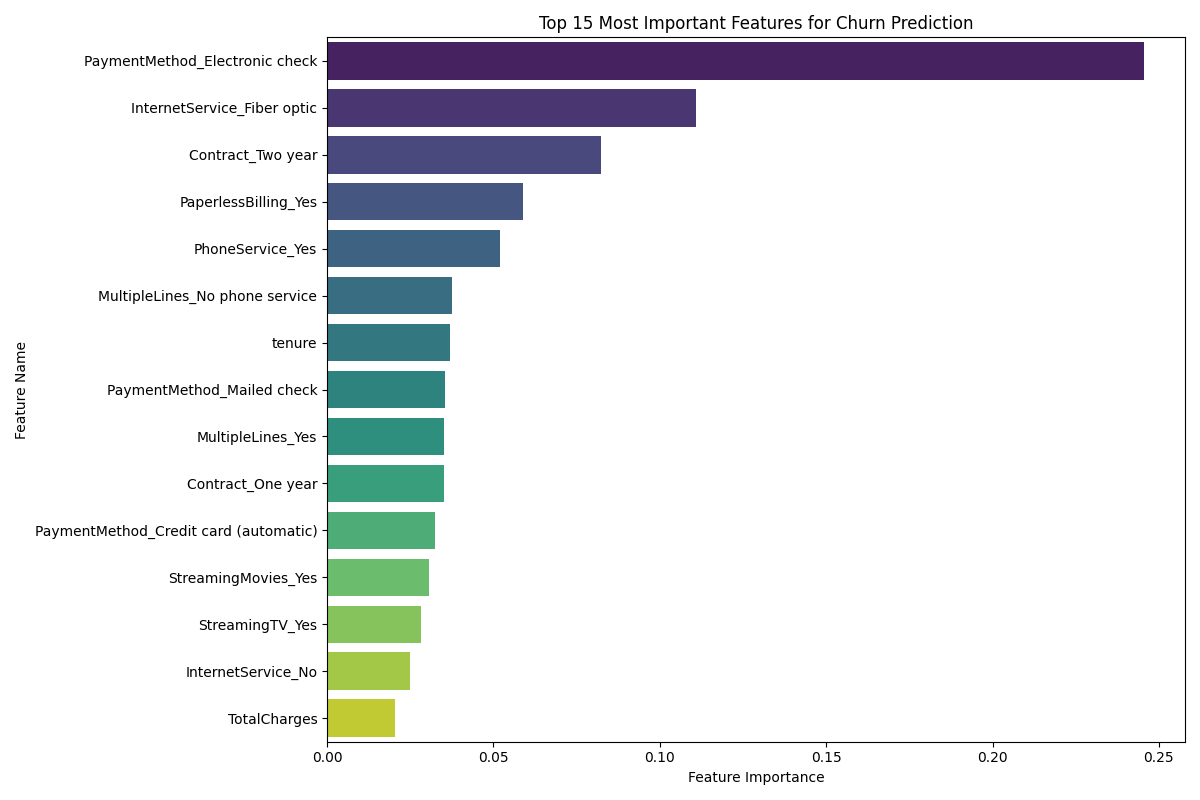
- exploratory analysis to understand churn drivers
- SMOTE to rebalance the training data
- XGBoost to build a strong classification model
- evaluation using precision, recall, and ROC-based metrics
Outcome
The result was a practical churn scoring framework that can support proactive retention campaigns, customer segmentation, and resource prioritization for growth teams.
Key Takeaways
- Class imbalance can be handled effectively with resampling techniques like SMOTE.
- Gradient-boosted models such as XGBoost can provide strong predictive performance on tabular customer data.
- The strongest analytics work is not only accurate, but also understandable enough to drive action.